Cuticle care: what to push back and what to leave alone
The cuticle is small, but it guards the place where your nail is made. A gentle routine keeps it neat without opening the door to infection.
Few parts of a manicure cause as much confusion as the . Some people trim it every week, others never touch it, and many are unsure where it begins and ends. The reassuring news is that caring for it well takes less effort than most routines suggest, and the gentlest approach is also the safest.
Cuticle, eponychium, nail fold: what is what
In everyday language, “cuticle” is used for the whole rim of skin at the base of the nail. Strictly speaking, it is something smaller. The cuticle is a thin layer of dead tissue that comes from the skin fold at the base of the nail and sticks to the nail plate as it grows forward.
The living skin at the base of the nail is the . The is the fold of skin that lies above the nail matrix, the tissue that produces the nail. Knowing the difference matters in practice: the dead cuticle can be gently moved, while living skin should be left intact.
Why the cuticle deserves respect
The cuticle acts as a seal. It closes the junction between the skin and the nail plate and so protects the nail matrix from bacteria and fungi. Remove or damage that seal and germs have a much easier way in, right next to the tissue that makes your nail.
This is why the American Academy of Dermatology advises against cutting cuticles: cutting raises the risk of infection. Pushing them back gently after softening is the safer approach. It gives a neat, tidy outline without breaking the barrier, and a smooth nail surround is far more a matter of softness and moisture than of removal.
A smooth nail surround is far more a matter of softness and moisture than of removal.
A gentle routine, step by step
A short session once a week fits easily into most routines. Work on clean, bare nails, and make sure every tool you use is clean and dry before you begin.
- Soften the skin by soaking your fingertips in warm water for a few minutes, or simply plan your routine for after a bath or shower.
- Pat your hands dry with a clean towel.
- With an orangewood stick or a rubber-tipped pusher, ease the cuticle back gently towards the base of the nail. Use light pressure and stop where the skin resists.
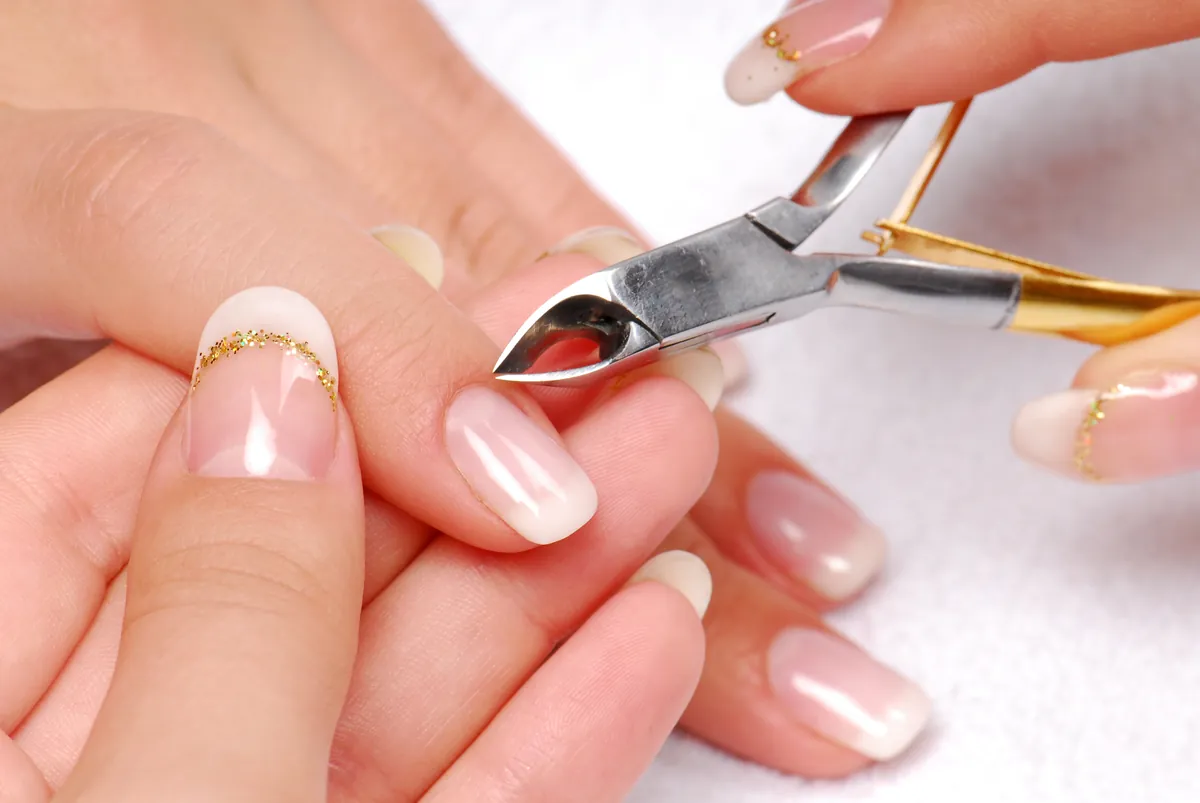
- Clip any hangnails with clean nippers, cutting only the loose piece of skin.
- Finish with a drop of cuticle oil on each nail and massage it into the surrounding skin.
What you leave out is just as important. Do not dig under the skin, do not scrape the nail surface hard and do not cut into the living skin at the base of the nail. If an area feels tender, leave it alone until next time.
Your tools deserve the same attention as your skin. Wooden sticks are porous and hard to clean, so keep them for your own use and replace them often. Metal nippers and pushers can be washed with soap and water and dried thoroughly after every session. Sharing them, even within a family, is best avoided.
Hangnails and the daily oil habit
Hangnails are small tears of skin at the side of the nail. They catch on fabric and are tempting to pull, but pulling or biting them can tear the skin further and leave a small open wound. Clip them instead with clean nippers, close to the base of the loose piece.
Daily oil is the simplest habit in nail care. Cuticle oil, for example jojoba oil, applied every day and especially before sleep keeps the skin around the nail supple, so it is less prone to cracking and tearing. A single drop per nail is enough; the massage that works it in matters as much as the oil itself.
Russian and e-file manicures
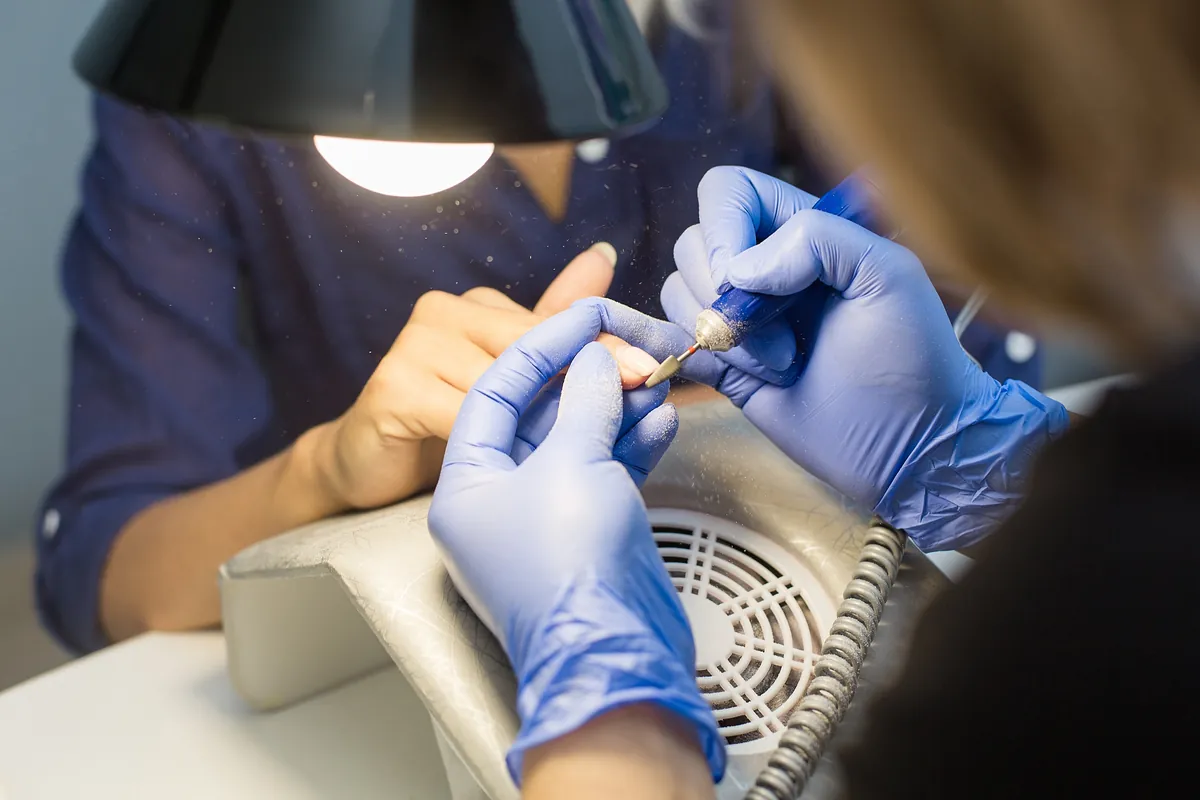
Some salons offer a so called Russian or e-file manicure, in which cuticle tissue is removed with a rotary file. The finish can look very precise, which is a large part of its appeal.
It is also a technique with little margin for error. It requires a highly trained technician, and done badly it can damage the nail plate and the skin. If you are considering it, ask about the technician’s training and how tools are cleaned between clients, and do not hesitate to ask them to stop if anything hurts.
When to see a doctor
Even with careful care, the skin around the nail can become infected. is an infection of the skin around the nail, with redness, swelling and pain. Small injuries, such as a torn or a cuticle that has been cut too deeply, can open the way for it.
Seek medical advice if redness and swelling do not settle, if pus forms or if the pain gets worse. A doctor or dermatologist can assess the finger and recommend the right treatment. Until then, keep the area clean, and do not push back, polish or decorate the affected nail.
Glossary
- Cuticle
- A thin layer of dead tissue from the skin fold at the base of the nail that sticks to the nail plate.
- Eponychium
- The living skin at the base of the nail, which is best left intact.
- Proximal nail fold
- The fold of skin at the base of the nail that lies above the nail matrix.
- Paronychia
- An infection of the skin around the nail, with redness, swelling and pain.
- Hangnail
- A small tear of skin at the side of the nail, best clipped with clean nippers.
Questions and answers
Is it safe to have my cuticles cut at a salon?
The American Academy of Dermatology advises against cutting cuticles, because cutting raises the risk of infection. You can simply ask your technician to soften and push them back instead, and to trim only loose hangnails. A good salon will respect that request, and the result still looks neat and cared for.
How often should I use cuticle oil?
Daily is ideal. A drop on each nail, massaged into the surrounding skin, keeps the area supple and less prone to cracking. Applying it before sleep works especially well, because the oil can stay on for hours without being washed off. Jojoba oil is a good example of a suitable oil.
The skin around my nail is red and swollen. What should I do?
Redness, swelling and pain around the nail can be signs of paronychia, an infection of the skin around the nail. Keep the area clean, stop pushing back or polishing that nail and seek medical advice if it does not settle or if pus forms. A doctor or dermatologist can assess it and recommend treatment.