What makes nails strong: a practical guide to nail health
Nails grow slowly and remember every soak and scrape. How they are built, what weakens them and the everyday habits that make a real difference.
Strong nails rarely come out of a single bottle. They come from understanding what a nail is, how slowly it renews itself and which small daily habits wear it down. Once you know that, caring for your nails becomes surprisingly simple, and far more a matter of patience than of products.
How a nail is made
The visible part of the nail, the nail plate, is made of , a hard protein that is also the main building block of hair. It is produced by the , a zone of living tissue that lies under the skin at the base of the nail. The pale half moon you can see on some nails is the : the visible part of the matrix.
This has one important consequence. The plate itself is no longer living tissue, so whatever happens to it, a chip, a split or a peeled layer, cannot be repaired from within. A nail improves only as new, healthier keratin grows forward from the matrix and the older part is trimmed away.
That growth is slow. A 2010 study in the Journal of the American Academy of Dermatology measured average growth of about 3.5 mm per month for fingernails and about 1.6 mm per month for toenails. In practice, a fingernail takes roughly four to six months to grow out completely, a toenail around twelve to eighteen months.
What wears nails down
The most common enemy is surprisingly ordinary: water. Hands that are washed, wetted and dried many times a day put nails through a constant cycle of soaking up water and drying out again. Over time, that cycle makes nails more brittle, and the familiar picture follows: tips that split, layers that peel and edges that catch on everything.
Harsh detergents and cleaning products add to the problem by drying out both the nails and the skin around them. Age plays its part too. Nails tend to become more brittle over the years, which is why a routine that worked perfectly at twenty may need adjusting later on.
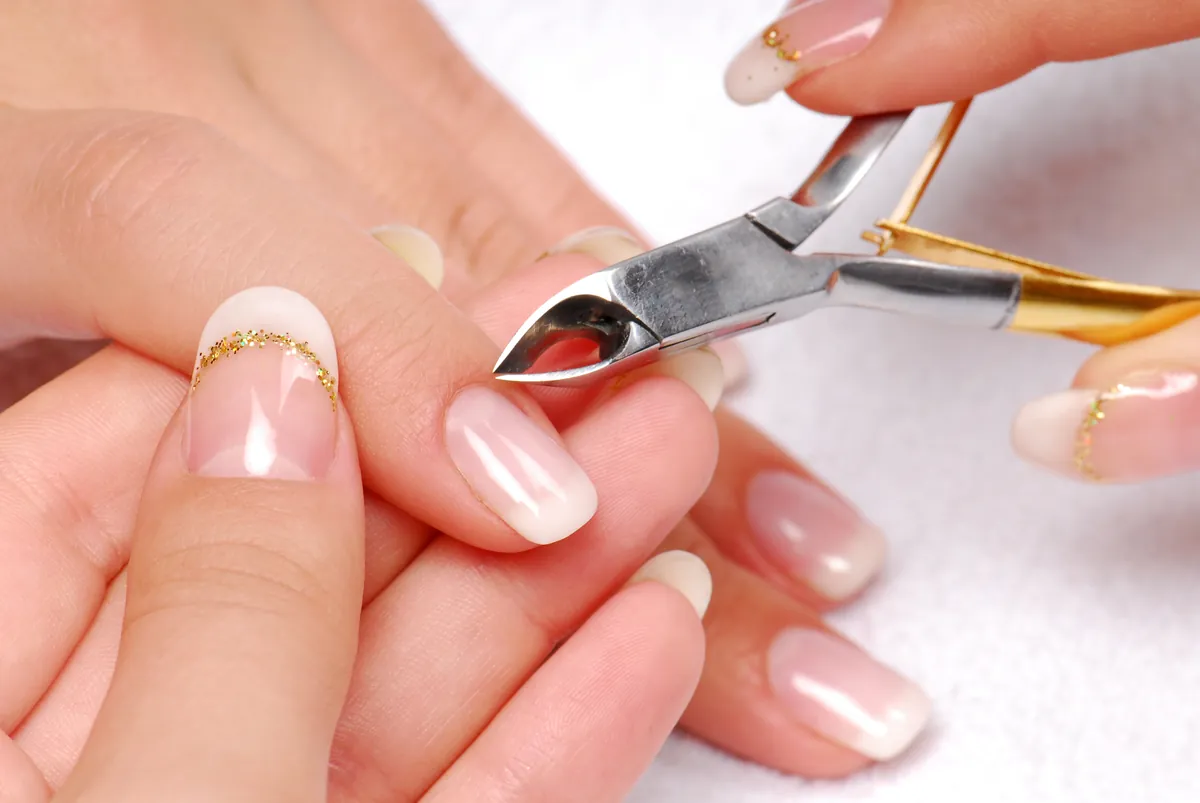
Then there are the habits we barely notice. Using nails to open cans, scrape off labels or prise apart a key ring puts sudden force on the , and a small crack there can easily travel further. Peeling off old polish or gel is just as costly, because it takes the top layers of the nail plate with it and leaves the surface thin and rough.
The everyday habits that help most
None of the following is expensive or complicated. What makes these habits effective is repetition, because their benefits build up over the months it takes for a nail to renew itself.
- Wear gloves for washing dishes, cleaning and any task that keeps your hands wet for a long time.
- Moisturise hands and nails after washing, and massage a little cream or oil into the nail plate and the skin around it.
- Keep brittle nails shorter. A shorter free edge is less likely to catch, bend and split.
- File rather than clip when you shape your nails, using a fine file and smooth, light strokes.
- Stop using nails as tools. Reach for a coin, a letter opener or the pad of your finger instead.
If you only change two things, make it gloves and moisturiser. Together they tackle the wetting and drying cycle directly, and that cycle is behind a large share of everyday nail weakness.
A nail improves only as new, healthier keratin grows forward from the matrix and the older part is trimmed away.
Biotin, diet and realistic expectations
Biotin, one of the B vitamins, is widely sold as a supplement for nails. The evidence that it strengthens them comes from small studies and is limited, so it is not the reliable fix that packaging can suggest.
There is also a practical caution. In 2017 the US Food and Drug Administration warned that high doses of biotin can interfere with some laboratory tests. If you take biotin, tell your doctor before any blood test, and ideally talk to them before you start a supplement at all.
A varied, balanced diet supports your health in general, and your nails are part of that picture. Still, no food or capsule can change a nail that has already grown. Whatever you try, judge it over months rather than weeks, and look at the new growth near the base, not at the old tips.
When to see a dermatologist
Most nail weakness is cosmetic and responds to gentle care. Some changes, however, should always be checked by a professional rather than treated at home or hidden under polish. See a dermatologist if you notice any of the following.
- A new or changing dark streak in a nail
- A nail lifting away from its bed
- Thickening of the nail
- A persistent change of colour
- Pain or swelling around the nail
These signs can have many different causes, some harmless and some not, and only an examination can tell them apart. Mention any medicines or supplements you take, and if you wear polish or gel, remove it before the appointment so the nail can be seen clearly. Strength, in the end, is built slowly, one careful month of growth at a time.
Glossary
- Keratin
- A hard, fibrous protein that forms the nail plate and is also the main building block of hair.
- Nail matrix
- Living tissue under the skin at the base of the nail that produces the nail plate.
- Lunula
- The pale half moon at the base of some nails; it is the visible part of the nail matrix.
- Nail bed
- The skin beneath the nail plate, to which the plate is attached.
- Free edge
- The part of the nail that extends beyond the fingertip and is filed or trimmed.
Questions and answers
How long before I see stronger nails?
Because the nail plate cannot repair itself, you only see a difference as new nail grows out from the base. A fingernail takes roughly four to six months to grow out completely, so give any new routine at least a few months. The first improvement usually shows near the base of the nail long before the tips change.
Do biotin supplements work for nails?
The evidence that biotin strengthens nails comes from small studies and is limited. In 2017 the US Food and Drug Administration warned that high doses can interfere with some laboratory tests, so speak to your doctor before taking it and mention it before any blood test. Everyday habits such as wearing gloves and moisturising are a sensible first step.
Are brittle nails a sign of illness?
Most brittle nails are linked to everyday factors such as frequent wetting and drying, harsh detergents and age. Nail changes can sometimes accompany other conditions, though. If your nails change suddenly, thicken, lift from the bed, show a dark streak or become painful or swollen, see a dermatologist, who can examine them and advise you properly.