How to choose a nail colour for your skin undertone
Why one red glows on you and another falls flat comes down to undertone. A simple method for finding yours and choosing shades that flatter it.
Have you ever bought a red that looked perfect in the bottle and strangely dull on your hands? The colour was probably fine. What made the difference was the skin around it. Choosing nail colour by is a simple way to find shades that look harmonious, and once you know yours, every choice at the colour wall becomes easier.
Skin tone and undertone are not the same thing
describes how light or deep your skin is. Undertone describes the hue beneath the surface, and it comes in three broad families. Cool undertones lean pink, red or bluish. Warm undertones lean yellow, golden or peach. Neutral undertones sit in between, with a mix of both.
Two people can share the same skin tone and have different undertones, which is why the same polish can look so different from one hand to the next. Olive skin often has a greenish note of its own, so testing shades against your hand matters even more if your skin is olive.
Three quick tests to find your undertone
You do not need special equipment, only daylight and a few minutes. Look at bare skin without make-up or self-tanner, ideally near a window.
- The vein test. Look at the veins on your inner wrist. If they look blue or purple, your undertone is probably cool. If they look green, it is probably warm. If you see both, you are likely neutral.
- The jewellery test. Hold silver and gold against your skin. Silver tends to flatter cool undertones, gold warm ones. If both look equally good, think neutral.
- The fabric test. Hold pure white and then ivory or cream fabric close to your face and hands. Pure white often suits cool undertones, ivory or cream warm ones.
No single test is decisive. Look for the answer that comes up most often, and treat the result as a guide rather than a rule. Choose a moment when your skin is in its usual state, not straight after time in the sun or a hot shower, when temporary redness can mislead you.
Reds, pastels and darks for each undertone
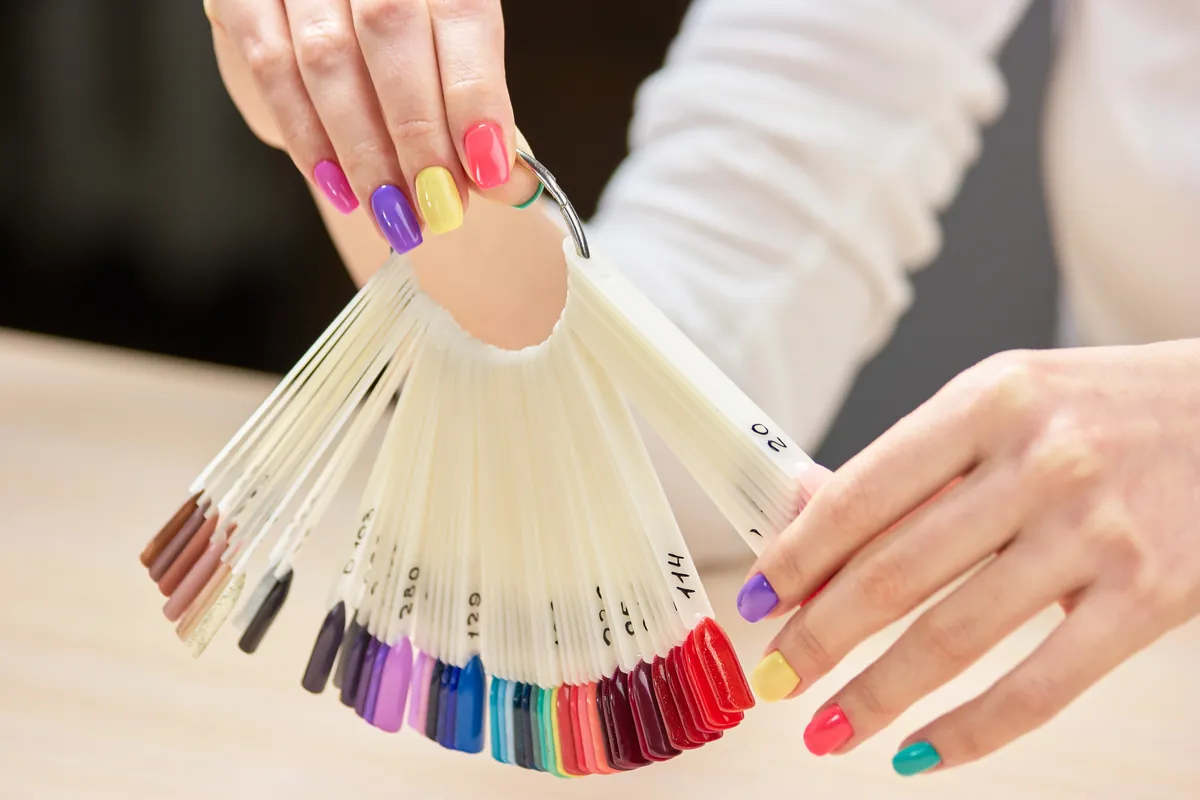
Once you know your undertone, the colour wall becomes much easier to read. These are the typical matches.
- Cool undertones: blue-based reds, berry, plum, fuchsia, icy lavender and silver.
- Warm undertones: coral, orange-red, terracotta, mustard, olive and gold.
- Neutral undertones: most shades work, including dusty rose, mauve and taupe.
With reds, everything depends on the base. A has a cool, wine-like depth, while an orange-red reads warmer and brighter. Hold the two side by side against your hand and the difference usually shows within seconds.
Pastels follow the same logic. A pastel with a cool, bluish or pink cast, such as icy lavender, sits naturally with cool undertones, while one with a warmer cast, closer to peach or butter yellow, is the more natural partner for warm undertones. Darks work in the same way: plum and deep berry for cool undertones, deep terracotta or olive for warm ones. Metallic polishes follow the jewellery test, with silver for cool undertones and gold for warm.
Finding your perfect nude
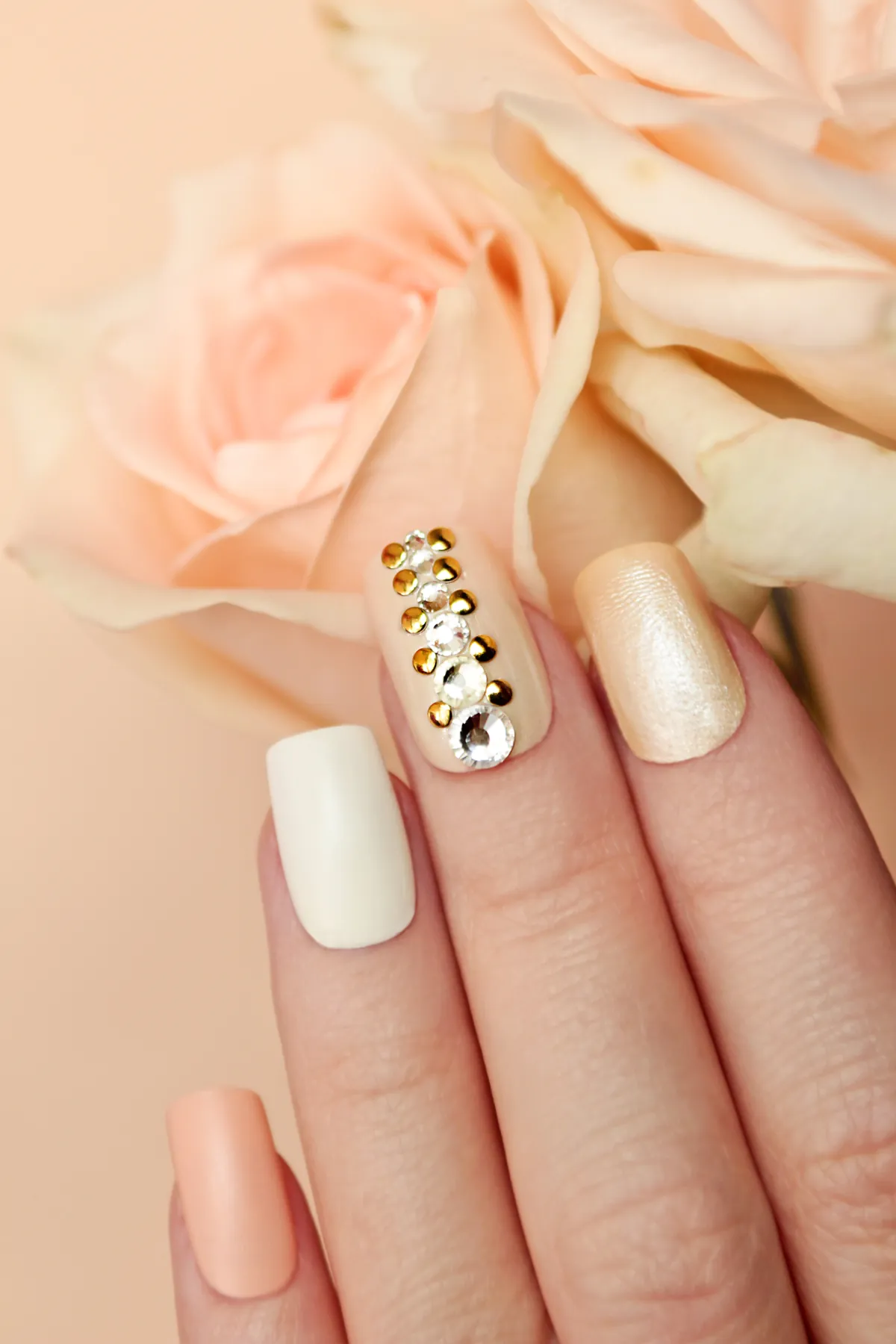
Nude is the shade most people find hardest, precisely because it is meant to look effortless. A flattering nude is usually one or two shades lighter or deeper than your skin, with a matching undertone. That small difference keeps the nail visible as a clean, polished surface rather than letting it disappear into the finger.
Depth matters as well. Fair skin suits soft pink beige, while deep skin is flattered by rich caramel and chocolate nudes. Medium skin can explore the shades in between and choose by undertone: rosier versions for cool undertones, sandier ones for warm. If a nude looks flat or chalky on you, the undertone is the first thing to check. It can also be worth keeping two nudes, one slightly lighter and one slightly deeper than your skin, and noticing which one you reach for most.
Contrast, personality and when to break the rules
Undertone is not the only factor. also matters: people with strong contrast between hair, skin and eyes can carry bold, saturated shades well. Softer, lower contrast colouring often looks especially harmonious in blended, muted tones.
Neutral undertones have the widest choice, but nobody is locked into a palette. Undertone guidance is a starting point, not a dress code. If you love a colour that supposedly does not suit you, try it in a different depth or finish, or wear it on shorter nails, where it reads more as an accent than a statement.
Undertone guidance is a starting point, not a dress code.
The most useful habit is simply to look closely. Hold the bottle against your skin before you buy, compare a cool and a warm version of the same colour, and notice which one makes your hands look rested and even. Your eye will learn quickly, and soon you will choose by instinct.
Glossary
- Skin tone
- How light or deep the skin is, independent of the hue beneath the surface.
- Undertone
- The hue beneath the skin’s surface, described as cool, warm or neutral.
- Blue-based red
- A red with a cool cast that tends to flatter cool undertones.
- Contrast
- The difference in depth between hair, skin and eyes; strong contrast carries bold shades well.
Questions and answers
What if the undertone tests give mixed results?
That is common, and it often points to a neutral undertone. Neutral undertones can wear most shades, including dusty rose, mauve and taupe. Repeat the tests in daylight on clean skin, and if they still disagree, simply compare a cool and a warm version of the same colour against your hand and trust what you see.
Does a tan change which nail colours suit me?
A tan changes how light or deep your skin looks, so a nude that was one shade deeper than your skin in winter may match it almost exactly in summer. Because a flattering nude is usually one or two shades lighter or deeper than the skin, it is worth testing your nudes against your hand again whenever your skin changes.
Do I have to follow my undertone every time?
No. Undertone is a helpful guide, not a rule. If a colour you love seems to clash, try a slightly different depth or finish, or wear it on shorter nails, where it reads as an accent. Contrast plays a part as well: people with strong contrast between hair, skin and eyes can carry bold, saturated shades well.