A nail colour calendar: shades for every season
From spring pastels to deep winter berry: a designer’s guide to seasonal nail colours, the finishes that change their mood and the shades that bridge the year.
Few things mark a change of season as quickly as a change of nail colour. The shift is small, a few bottles on a shelf, yet it tunes your hands to the light, the clothes and the mood of the months ahead. Think of this guide as a calendar of ideas rather than a set of rules: a way to plan shades that feel right for the time of year and still feel like you.
Why colour follows the seasons
Seasonal palettes grew out of fashion and interiors, where designers have long matched colour to light and texture. Spring brings lighter fabrics and softer shades. Autumn brings wool, leather and deeper tones. Nails sit right beside those clothes, so it makes sense that they move with them.
Light plays its part too. Strong, high sun lets saturated colours shine and can make very pale shades look flat. Low, grey light flatters depth, warmth and shine. Because seasons arrive at different times around the world, it helps to think in terms of light and weather rather than calendar months. In the southern hemisphere the calendar flips, and in the tropics the rhythm may be wet and dry rather than four seasons.
Spring: pastels and fresh starts
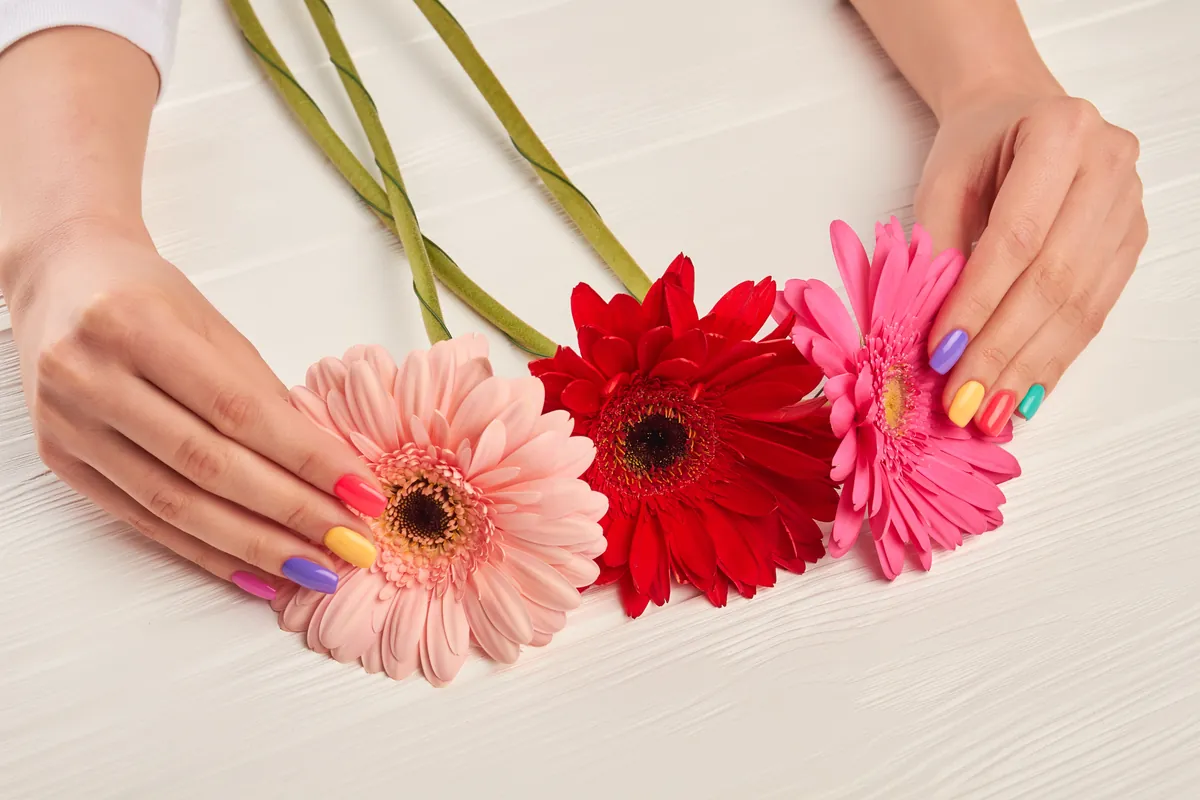
Spring palettes are built on pastels such as lilac, butter yellow, mint and soft pink. They are light in value and gentle in saturation, which makes them easy to combine. A different pastel on each nail looks deliberate rather than chaotic, because the shades share the same softness.
For a more refined take, choose pastels with a touch of grey in them, or pair a single pastel with a sheer milky base. Fine white lines or one small floral accent suit the season without tipping into sweetness.
Summer: brights and crisp white
Summer invites brights such as coral, turquoise and crisp white. They hold their own in strong daylight and look at home beside linen, cotton and swimwear. Coral is the most forgiving of the three: warm enough to flatter many skin tones and bright enough to feel festive. Summer is also the season of the pedicure, when open shoes put toenails on show.
Crisp white is a design tool in itself. It makes neighbouring brights look brighter and turns simple graphic shapes into summer patterns. Jelly finishes, which are translucent and glossy, give brights a glass-like look that suits warm days and long evenings outdoors.
Autumn: earth, spice and wine
Autumn palettes take their cue from turning leaves and heavier clothes: burgundy, rust, olive, chocolate and mustard. These shades are mid to deep in value and often slightly muted, so they combine as easily in autumn as pastels do in spring.
Try olive with mustard for a set with quiet warmth, or a chocolate base with one rust accent nail. A shimmer finish in burgundy catches the lower light of the season and adds depth without the drama of full glitter. Matte versions of these shades look soft and velvety, almost like suede.
Winter: depth and shine
Winter is the season of deep berry, plum, navy and classic red, with metallics and glitter for festive evenings. Dark shades look rich against knitwear and party clothes alike. They also show chips and uneven edges more clearly than pale shades, so a careful top coat and clean cuticle lines are worth the time.
Metallic and finishes reflect light like jewellery. Used on every nail they become a statement; used on one or two they work like a ring or a bracelet. Glitter is easiest to wear as a gradient from the tip or as a single accent nail.
Bridging the seasons
Weather rarely changes overnight, and neither does taste. Transitional shades that work all year include mauve, taupe, nude and sheer milky tones. They act as neutral ground between palettes: taupe sits comfortably beside both olive and lilac, and mauve links spring pinks with autumn plums.
Finish is the second bridge. The same shade changes mood with its finish, so you can carry a favourite colour through the year instead of replacing it.
The same shade changes mood with its finish, so you can carry a favourite colour through the year instead of replacing it.
- Cream: opaque and glossy, the classic all-rounder.
- Sheer and jelly: translucent, light and fresh, ideal for warm months.
- Shimmer: fine light-catching particles that add depth to mid and deep shades.
- Metallic and chrome: mirror-like and reflective, a natural choice for festive evenings.
- Glitter: larger particles, best used as an accent or a gradient.
- Matte: velvety and soft, a modern twist on deep autumn and winter shades.
Seasonal nail palettes should not be confused with for people, which assigns a person to spring, summer, autumn or winter according to the colours that flatter them. That idea was popularised by Carole Jackson’s book Color Me Beautiful, published in 1980. The two can be combined: if you know your personal palette, choose the seasonal nail shades that fall within it.
Glossary
- Transitional shade
- A colour that works across the seasons, such as mauve, taupe or nude, bridging two seasonal palettes.
- Jelly finish
- A translucent, glossy polish that lets some light through and gives colour a glass-like look.
- Chrome
- A highly reflective, mirror-like finish, often created by buffing a fine powder onto gel.
- Seasonal colour analysis
- A method that assigns a person to spring, summer, autumn or winter according to the colours that flatter them.
Questions and answers
Can I wear dark colours in summer?
Of course. Seasonal palettes are a starting point, not a rule. Deep shades in summer look striking and modern, especially in a glossy cream or jelly finish that keeps them from feeling heavy. Balance them with lighter clothes or a crisp white accent nail. Navy, for example, works beautifully with summer whites and has a relaxed, nautical feel.
What if I live somewhere without four distinct seasons?
Then follow the light and your wardrobe rather than the calendar. In hot climates with little seasonal change, brights and sheer shades may suit you all year, with deeper tones saved for evenings or special occasions. Where the year has wet and dry seasons, you might reserve muted, earthy shades for the rainy months and clearer brights for the sunny ones.
Which nail colour works in every season?
Nude, mauve, taupe and sheer milky tones work all year. They suit most occasions, grow out discreetly and combine with any seasonal accent. Choose a nude whose undertone matches your skin, warm or cool, and change the finish with the season: glossy in spring and summer, shimmer or matte in autumn and winter.