How to give yourself a salon-worthy manicure at home
A calm, unhurried routine for nails that look professionally done and last: preparation, shaping, cuticle care, thin coats and a proper finish.
A salon manicure owes far less to expensive tools than to order and patience. Professionals work in the same sequence every time, keep every layer thin and never rush the finish. You can borrow all three habits at home. Set aside an hour, clear a table near good light and work through the steps below without skipping ahead.
Set up before you start
Gather everything first, so you are not hunting for a cotton pad with wet nails. Work at a table with daylight or a bright lamp, and rest your forearm on the surface to keep your hand steady. A folded towel underneath protects the table and catches filing dust.
- Polish remover and lint-free pads
- A fine nail file, around 180 or finer
- An and a cuticle softener or a bowl of warm water
- Small clippers for loose hangnails
- Base coat, colour and top coat
- A small flat brush for cleaning edges
- Cuticle oil
The routine, step by step
This is the order professionals follow. Each step prepares the next, so resist the temptation to jump straight to colour.
- Remove old polish. Press a soaked pad onto each nail for a few seconds before wiping, rather than scrubbing, so colour does not smear onto the skin.
- Shape. File with a fine file in one direction, from the side of the nail towards the centre.
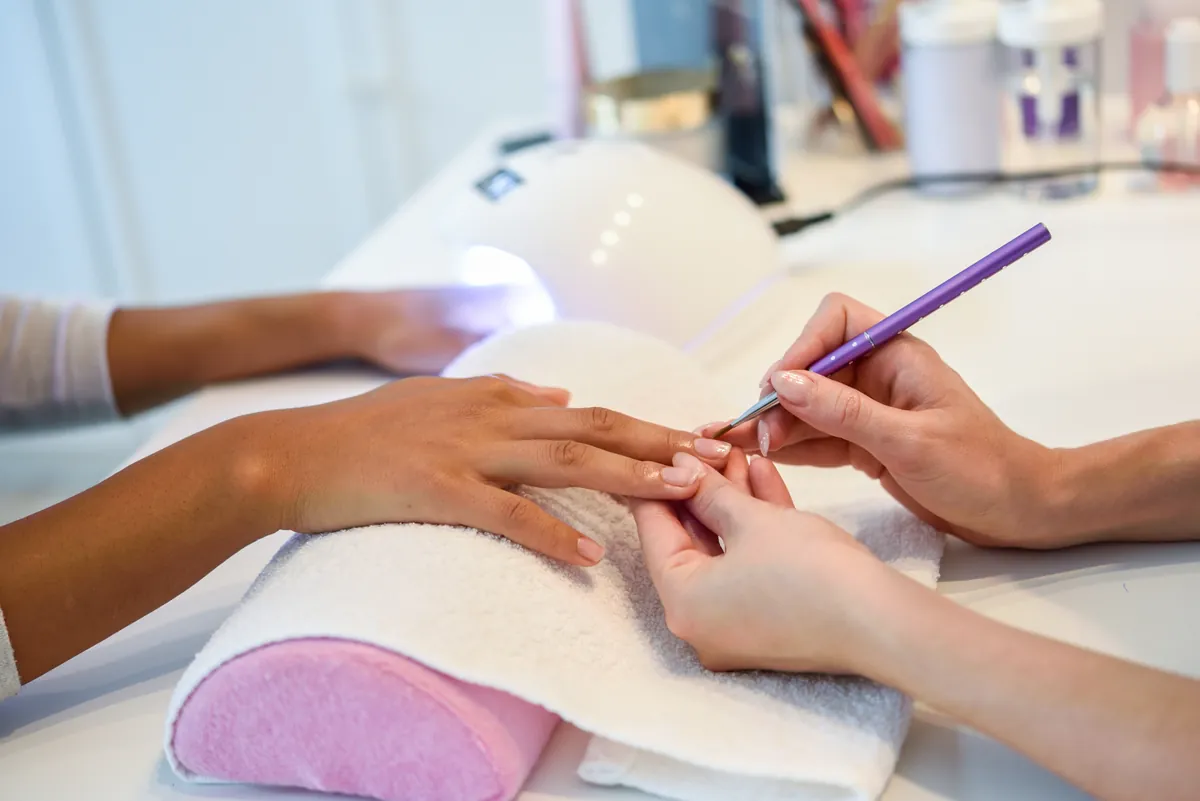
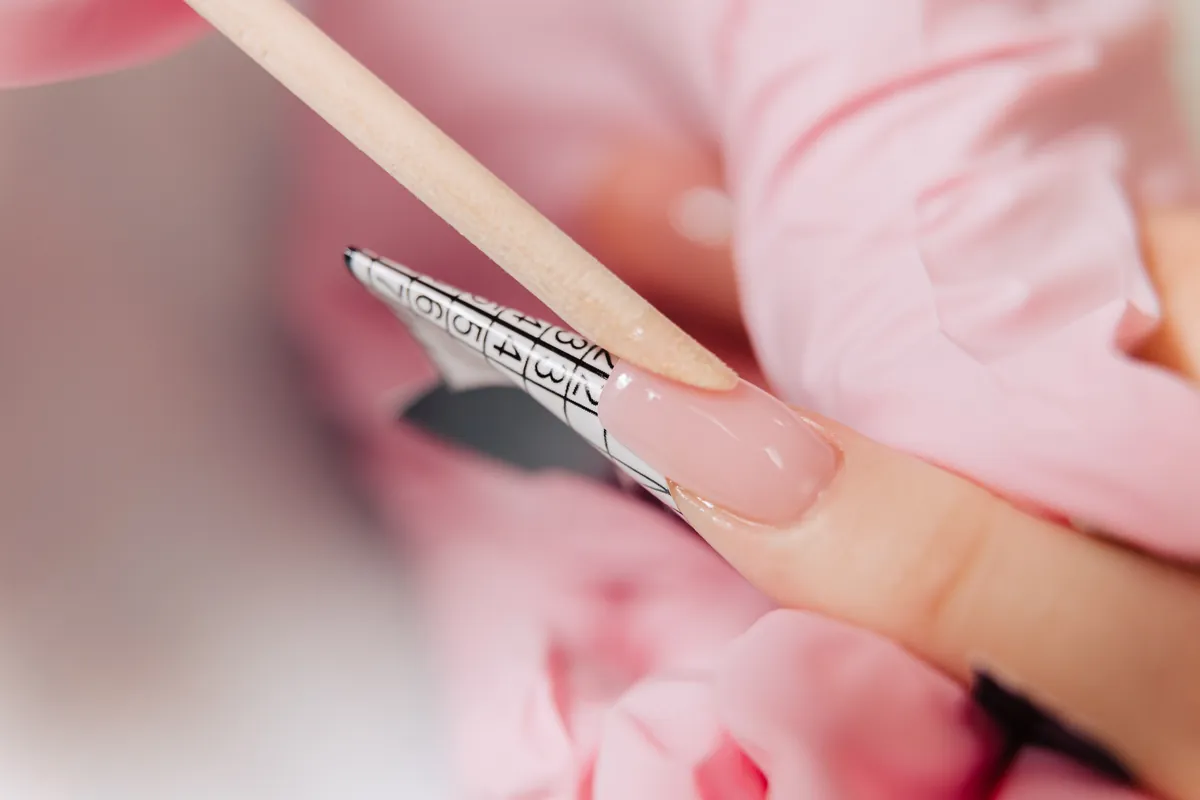
- Care for the cuticles. Soften them with warm water or a cuticle softener, then push them back gently with an orangewood stick.
- Buff only if needed. A light pass can smooth a ridge, but heavy buffing thins the nail plate.
- Cleanse. Wipe each nail with alcohol or remover to take away oils, which helps the polish adhere.
- Base coat. Apply one thin layer and let it set.
- Colour. Apply two thin coats, leaving a couple of minutes between them.
- Top coat. Seal the colour and cap the .
- Clean the edges. Tidy any polish on the skin with a small brush dipped in remover.
- Finish with oil. Once the surface feels dry, add a drop of cuticle oil to each nail.
Shaping and cuticles without damage
A fine file of around 180 grit or finer is kind to natural nails. Hold it at a slight angle under the free edge and work in one direction from each side towards the centre. Sawing back and forth can fray the free edge and leave it prone to peeling. Check the shape from above and from the side every few strokes: soft ovals and gently rounded squares are easy to maintain and less likely to catch than sharp corners.
Cuticles deserve the gentlest touch of the whole routine. Once softened, they can be eased back with an orangewood stick in small movements. Do not cut living skin. The cuticle forms a seal that helps protect the base of the nail, and cutting it can leave the area open to irritation and infection. Only clip loose hangnails, close to the skin and without pulling.
Cuticles deserve the gentlest touch of the whole routine.
Application: thin coats, clean lines
Thin coats are the biggest difference between a home manicure that lasts and one that smudges. They dry faster and more evenly than thick ones. Wipe one side of the brush on the neck of the bottle, place a small bead of polish just above the cuticle and draw it towards the tip in three strokes: centre first, then each side.
The base coat comes first for a reason: it gives colour something to grip and helps stop deep shades from staining the nail plate. Paint the hand you use less often first, while your steadier hand is still free, then switch and take a little more time over the harder side.
Leave a hairline gap at the cuticle and sidewalls, which looks precise and keeps polish off the skin. Wait a couple of minutes between coats. With the colour and again with the top coat, cap the free edge: run the brush lightly along the very tip of the nail so the product wraps the edge and seals it. The tip takes the most knocks, so this small move protects the place where chips usually begin.
Drying time and aftercare
Patience matters most at the end. Polish can feel dry to the touch within minutes, yet it needs considerably longer to harden fully, so a nail that seems finished can still dent against a duvet or a tight pocket. Keep the rest of the evening gentle: avoid rummaging in bags and leave the washing up for another time.
Aftercare keeps the result looking fresh. Massage a drop of cuticle oil into each nail daily, wear gloves for cleaning and washing up, and add a thin layer of top coat every few days if you want to restore the shine. When the first real chip appears, remove and repaint rather than patching over it: a clean restart looks better than layers of touch-ups.
Glossary
- Free edge
- The part of the nail that extends beyond the fingertip, where chips and peeling usually begin.
- Grit
- A measure of a file’s coarseness. Higher numbers are finer and gentler on natural nails.
- Orangewood stick
- A slim wooden tool with a slanted end, used to push back softened cuticles and tidy edges.
- Capping
- Running the brush along the tip of the nail so colour and top coat wrap and seal the free edge.
- Hangnail
- A small torn piece of skin at the side of the nail, which can be clipped carefully close to the skin.
Questions and answers
How long should I wait between coats of polish?
Leave a couple of minutes between coats. Thin layers dry faster and more evenly than thick ones, so two thin colour coats with a short pause work better than one heavy coat. Remember that polish can feel dry to the touch within minutes but takes considerably longer to harden fully, so treat your nails gently for the rest of the day.
Should I cut my cuticles at home?
No. Soften them with warm water or a cuticle softener and push them back gently with an orangewood stick instead. The cuticle helps seal and protect the base of the nail, and cutting living skin can lead to irritation or infection. Only clip loose hangnails close to the skin. If the skin around a nail becomes red, swollen or painful, see a doctor or dermatologist.
Why does my polish chip so quickly?
Frequent causes are natural oils on the nail plate, thick coats and an unsealed tip. Wipe the nails with alcohol or remover before the base coat, apply thin layers and cap the free edge with both colour and top coat. Daily tasks matter too, so wear gloves for housework and keep the nails and skin supple with cuticle oil.