Nail extensions explained: acrylic, gel and press-on
Acrylic, hard gel, soft gel tips, polygel and press-ons all add length, but they are applied, maintained and removed in very different ways.
Extensions promise length and shape that natural nails rarely offer on their own. Yet “extensions” is an umbrella term for several quite different materials, each with its own chemistry, feel and way of coming off. Understanding them helps you choose well, talk clearly with your technician and, above all, protect the natural nail underneath.
Tips or forms: how length is built
Every extension needs a foundation for the new length, and there are two ways to create it. The first is a tip: a pre-made plastic tip glued to the end of the natural nail, then covered with product and blended until the join disappears.
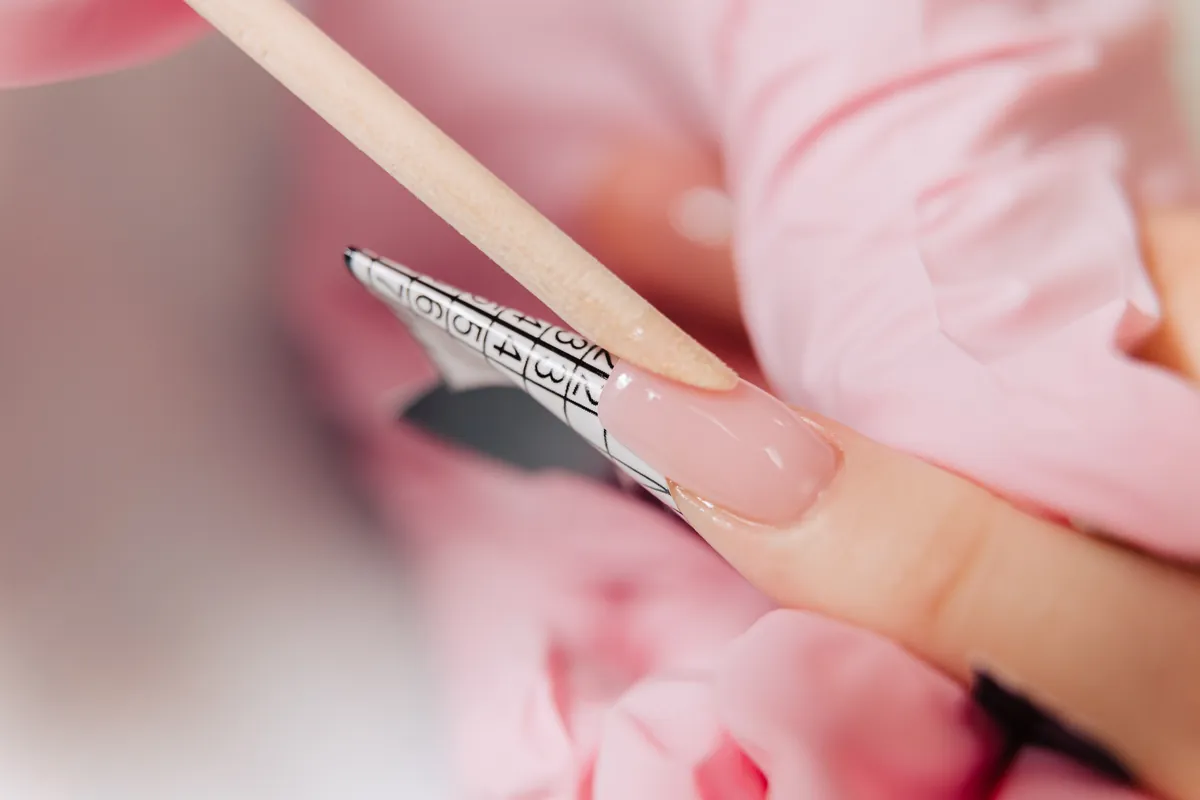
The second is a form: a guide placed under the free edge, on which the technician sculpts the extension directly. Nails made this way are called sculpted nails. They take more skill and time, but they allow a very precise shape and a seamless line from cuticle to tip.
Acrylic: the sculptor’s material
Acrylic nails are made by mixing a liquid with a polymer powder. The technician picks up a small bead of the mixture on a brush, places it on the nail and shapes it before it hardens in the air. Once set, the extension is filed and refined into its final form. Acrylic is strong and versatile, which is why it is a long-standing choice for dramatic lengths and shapes.
Ingredients matter here. Reputable acrylic systems use ethyl methacrylate, known as , as their liquid. Liquid methyl methacrylate, or MMA, is considered unsuitable by the profession and is restricted in many US states. If you are unsure, it is entirely fair to ask which liquid a salon uses. Acrylic is usually removed by filing down the bulk and then soaking the rest in acetone.
Gel extensions: hard gel, soft gel and polygel
Hard gel is a builder gel cured under a lamp. It forms a tough, glossy structure, but it cannot be soaked off. Removal means filing it down, which should be done carefully by a trained technician so the natural nail is not thinned in the process.
Soft gel extensions work differently. They are pre-shaped, full cover tips made entirely of soft gel. The technician attaches them with a gel adhesive and cures them under the lamp. Because the material is soft gel, they can be soaked off with acetone, which many clients find reassuring.
Polygel is a putty-like hybrid of acrylic and gel. It is pressed into place and shaped with a brush moistened with a , then cured under a lamp. Its appeal is working time: the material does not set until it is cured, so the shape can be refined without rushing. Removal methods vary between systems, so ask your technician how they take theirs off.
Press-ons: the flexible alternative
Press-on nails are ready-made nails attached with nail glue or adhesive tabs. Tabs give a lighter hold and come away more gently, and press-ons worn with tabs can often be reused. Glue holds more firmly but needs a soak to release, and the nails should never be forced off.
Their great strength is commitment, or the lack of it. You can wear a set for an evening and take it off the next morning. Fit matters: choose a size that covers the nail from sidewall to sidewall without resting on the skin, and cleanse the nail plate first so the adhesive grips evenly.
Maintenance, lifting and safe removal
As your natural nail grows, the extension moves forward and a gap appears at the cuticle. That is why extensions need an infill or rebalance about every two to three weeks, when the technician fills the regrowth and restores the balance of the shape. Leaving it much longer shifts the weight towards the tip, which puts extra stress on the natural nail.
Watch for , where the product starts to separate from the nail. Lifting can trap moisture underneath, so a lifted nail should be seen to by a professional rather than glued down at home. If you notice discolouration, pain, swelling or a nail loosening from its bed, see a doctor or dermatologist.
Most importantly, extensions should never be prised off. Levering them away tears layers from the natural nail plate and can leave it thin and sensitive until it has grown out. Removal should follow the method that suits the material: soaking for acrylic and soft gel, careful filing for hard gel and a gentle soak for glued press-ons.
Most importantly, extensions should never be prised off.
Choosing the right system
Start with how you live with your hands. Acrylic and hard gel suit people who want length and strength for weeks at a time and are happy to keep regular infill appointments. Soft gel tips appeal if you prefer a removal that relies on soaking rather than heavy filing. Press-ons suit special occasions, short trips or anyone curious about length before committing to a salon set.
Whatever you choose, tell your technician about any previous reactions to nail products, and be honest about how often you can return. A modest length that is maintained well looks better, and is kinder to the natural nail, than an ambitious set left to grow out.
Glossary
- Monomer
- The liquid in an acrylic system, mixed with polymer powder to form the paste that hardens in the air.
- EMA
- Ethyl methacrylate, the liquid used in reputable acrylic systems, as opposed to liquid MMA.
- Sculpted nail
- An extension built on a form placed under the free edge, rather than on a glued tip.
- Slip solution
- A liquid used to keep the brush from sticking while polygel is pressed and shaped.
- Lifting
- Separation of extension product from the natural nail, which can trap moisture and should be seen to by a professional.
Questions and answers
Which type of extension is gentlest on natural nails?
No material is gentle or harmful on its own. Damage usually comes from heavy filing, extensions left too long without an infill and, above all, prising them off. Press-ons with adhesive tabs involve the least commitment, while soft gel tips can be soaked off. Whatever you choose, regular maintenance and careful, professional removal protect the natural nail far more than the choice of product.
Can I remove acrylic nails myself?
Acrylic is removed by filing back the bulk and soaking the rest in acetone, but it takes time and patience, and the temptation to lever off the last pieces is strong. Extensions should never be prised off, because that tears layers from the natural nail. If you are unsure, or if any nail looks lifted or discoloured, let a professional remove them.
What is the difference between polygel and acrylic?
Acrylic is made by mixing a liquid monomer with a polymer powder, and the paste hardens in the air. Polygel is a putty-like hybrid of acrylic and gel that is shaped with a brush and a slip solution and only sets when it is cured under a lamp. That gives the technician more time to perfect the shape before it hardens.