The French manicure, classic, micro and reverse
Where the white tip came from, the variations worth knowing and three reliable ways to paint a smile line that looks clean and natural.
Few manicures have travelled as far as the French. A sheer pink or nude base, a white tip that follows the of the nail, and nothing more: the formula is so simple that it reads as a natural nail, only neater. It has outlasted decades of trends because it adapts so easily. Make the tip thinner, move it to the base, swap white for colour or soften it into a gradient, and the same idea feels new again.
Where the French manicure comes from
The look is widely credited to Jeff Pink, founder of the American nail brand Orly, in the mid 1970s. He wanted a neutral manicure for film and fashion work, one that would match any outfit without a change of colour. The name is usually linked to Paris fashion shows, and it has stayed with the style ever since.
Its staying power comes from a kind of honesty. A French manicure does not disguise the nail. It exaggerates what a well cared for nail already looks like, with a pink nail bed and a pale free edge, which is why it feels at home at a wedding, in a boardroom or under studio lights.
A French manicure does not disguise the nail.
Anatomy of a good French
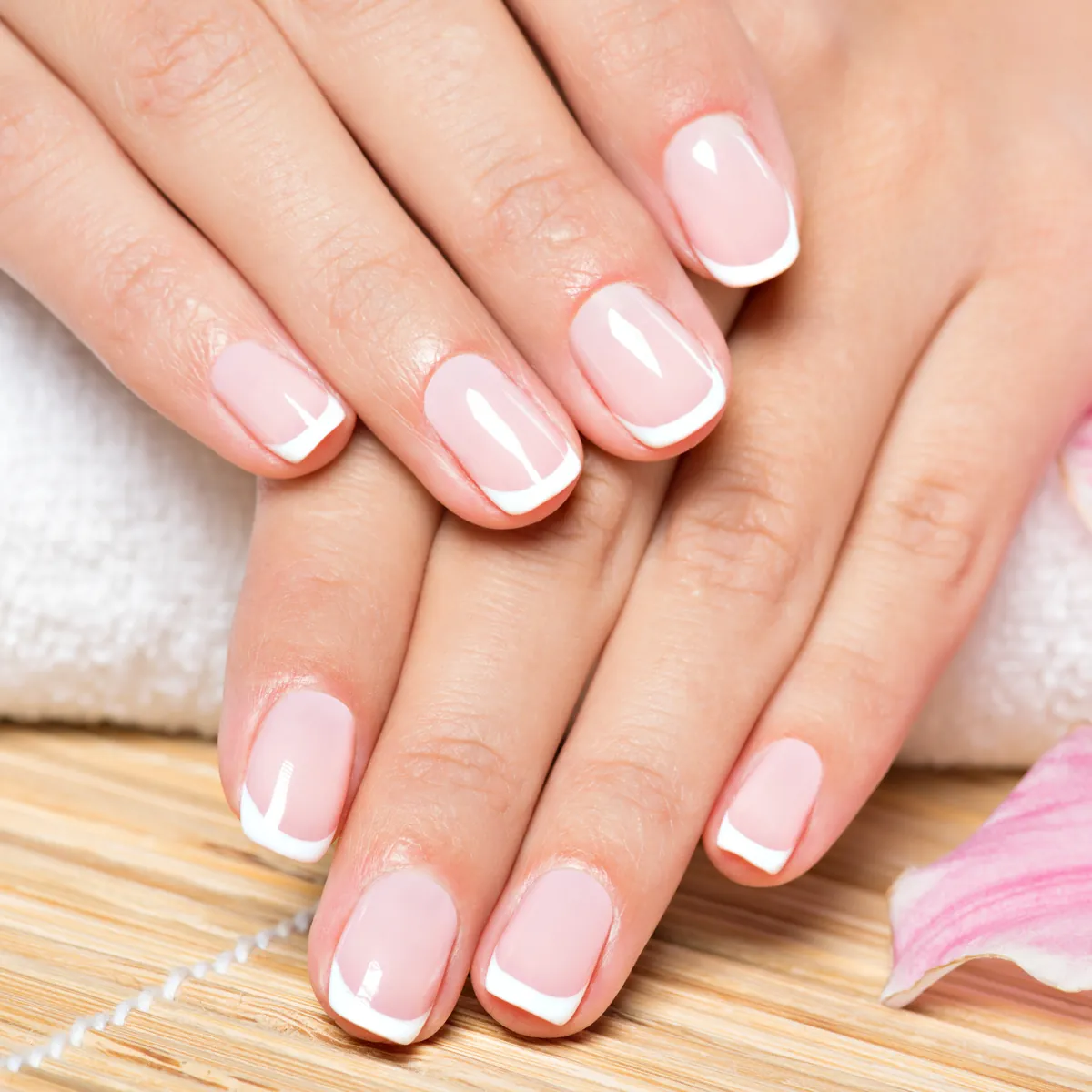
Two elements decide whether a French looks refined or heavy. The first is the base, which should be sheer enough to let the natural nail show through. The second is the , the curve where the white tip meets the pink of the nail bed. A good smile line is symmetrical, echoes the shape of the nail and sits at the same height on both sides.
Proportion matters as much as precision. On a short nail, a deep tip can make the nail look shorter still, while a slim, crisp line leaves more visible length. Let the curve follow the nail shape: softly rounded for oval and almond, flatter and wider for square.
The shades deserve the same thought. A base that is slightly too pink or too beige can look like a coating rather than a natural nail, so test it against your own skin tone in daylight. The white matters as well: a soft white reads gentler and more natural, while a bright, opaque white gives the crisp contrast many people associate with the classic look.
The variations worth knowing
Once you understand its structure, the French becomes a framework rather than a fixed look. These are the variations you will meet most often.
- : a very thin tip line, ideal for short nails and a quiet finish.
- Deep French: a deeper tip that covers more of the nail and looks more graphic.
- Reverse French or half moon: colour or a line at the base of the nail, near the cuticle, instead of at the tip.
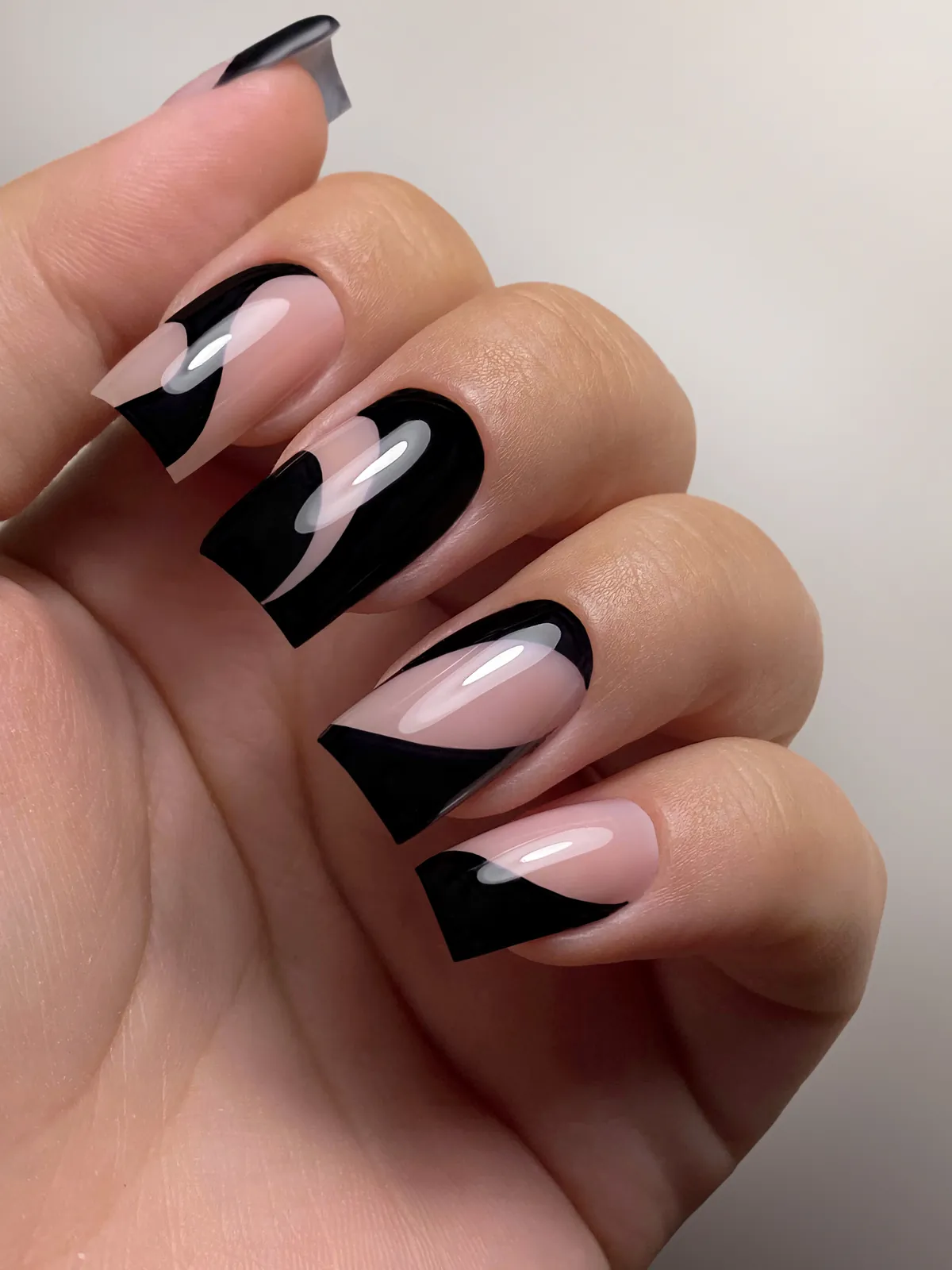
- Coloured French: any shade in place of white, from soft pastels to near black.
- Double French: two parallel lines that follow the free edge.
- V French: a chevron tip, with two straight lines meeting in a point.
- Ombré French, also called : a soft gradient from pink to white.
The baby boomer is the gentlest of them all, because it has no hard line. It suits anyone who loves the idea of a French but finds the classic contrast a little too crisp for every day.
Three ways to paint the tip
There is no single correct method, so choose the one that suits your hand and your patience.
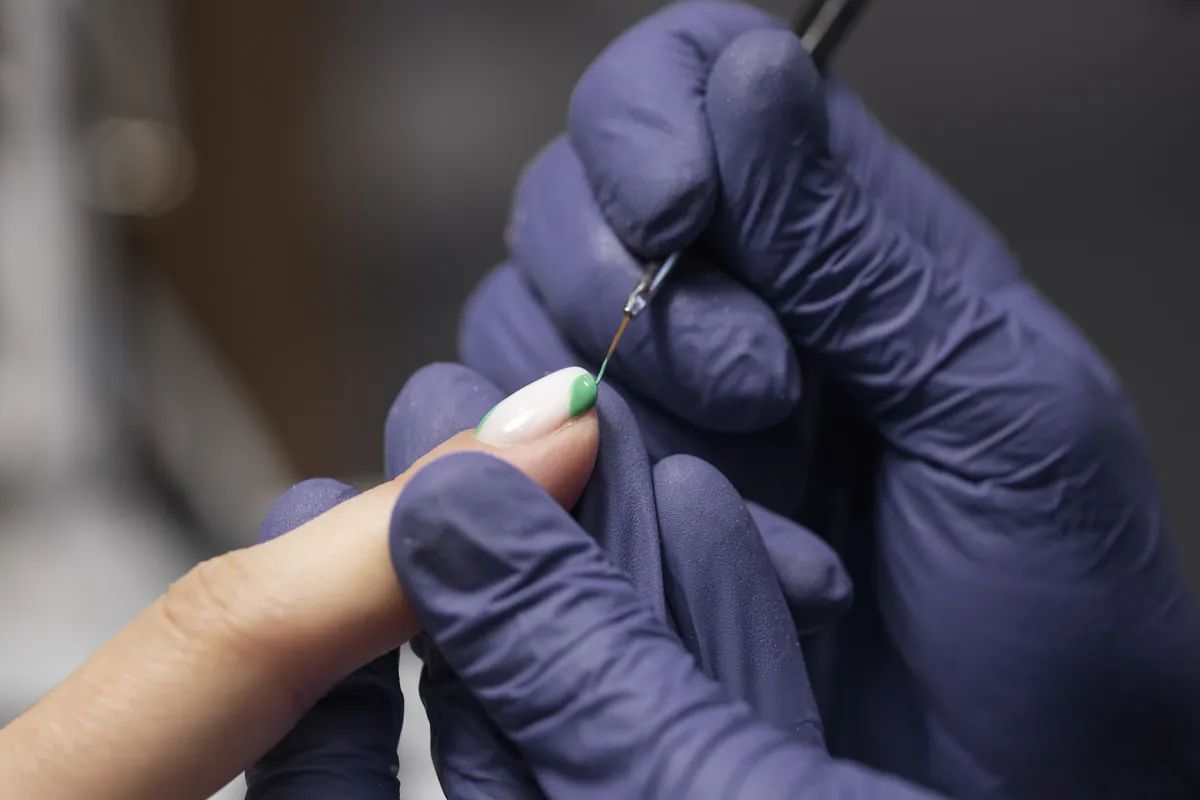
Freehand with a long, thin brush gives the most natural curve once you have some practice. Rest your hand, start at one side of the free edge and pull the brush towards the centre, then repeat from the other side so the two halves meet in the middle.
Tip guides or tape give a clean edge without a steady hand. Place the guide just below the free edge, paint the tip, then lift the guide away while the polish is still slightly wet so the edge stays sharp.
The silicone stamper trick is the quickest of the three. Brush white polish onto a soft silicone stamper, press the tip of the nail gently into it at a slight angle, and the soft surface forms the curve for you. Whichever method you choose, clean up with a small brush dipped in remover.
- Apply base coat and let it set.
- Paint one or two thin coats of sheer pink or nude.
- Create the white tip freehand, with a guide or with the stamper trick.
- Refine the smile line and tidy the skin with a small brush dipped in remover.
- Seal with top coat, running the brush along the free edge.
Keeping the French modern
A contemporary French tends to be lighter: a sheerer base, a slimmer tip and a softer shape. A micro tip on a milky base looks quietly current, a coloured tip brings in personality, and a reverse French moves the same idea to the cuticle. A double or V French adds a graphic edge without losing the clean structure underneath.
The best versions share one quality with the original. They look effortless, even though every line has been placed with care.
Glossary
- Smile line
- The curve where the white tip of a French manicure meets the pink of the nail bed.
- Free edge
- The part of the nail that extends beyond the fingertip, painted white in a classic French.
- Micro French
- A French manicure with a very thin tip line, well suited to short nails.
- Baby boomer
- Another name for the ombré French, a soft gradient from pink to white.
- Tip guide
- An adhesive strip placed just below the free edge to give the tip a clean line.
Questions and answers
Does a French manicure suit short nails?
Yes, especially in its micro form. A very thin tip line keeps a short nail looking as long as possible, while a deep tip can make it appear shorter. Keep the base sheer, follow the natural curve of the free edge and choose a soft, practical shape such as round or squoval for a clean, balanced result.
How do I get both sides of the smile line even?
Work from each side of the free edge towards the centre rather than in one sweep, so you can match the height on both sides. Check the nail from straight above, not at an angle. If one side sits higher, refine it with a small brush dipped in remover before sealing everything with top coat.
Can a French manicure work in colour?
Yes. A coloured French replaces the white tip with any shade, from pastels to deep tones, while keeping the sheer base. Because the structure stays the same, the look still reads as clean and considered. Colour also works well in a double French, where two parallel lines follow the free edge.